
Commercial water damage restoration typically takes anywhere from three days to several weeks to complete. The exact timeline is primarily determined by the volume and category of water involved, the total square footage and structural materials affected, and how quickly professional mitigation begins. By initiating immediate extraction and deploying industrial structural drying equipment within the first 24 hours, commercial properties can significantly shorten downtime and prevent secondary structural deterioration.
Understanding the specific variables that influence your recovery schedule allows business owners and property managers to plan effectively, safeguard assets, and minimize operational disruptions.
1. Class and Category of Water Contamination
The nature and volume of the water entering a commercial facility dictate the safety protocols, personal protective equipment (PPE), and drying strategies required.
Categories of Water
- Category 1 (Clean Water): Originates from sanitary sources such as broken clean-water supply lines, sink overflows, or appliance leaks. Restoration in Category 1 scenarios is usually the fastest, often concluding in 3 to 5 days if addressed immediately.
- Category 2 (Gray Water): Contains significant chemical, physical, or biological contamination. Common sources include dishwasher discharge, washing machine overflows, or sump pump failures. Sanitization steps add time to the schedule.
- Category 3 (Black Water): Highly unsanitary water containing sewage, river flooding, or standing water that has grown bacteria due to delay. Category 3 events require extensive containment, removal of porous materials, and thorough decontamination before drying begins, adding days or weeks to the overall timeline.
Classes of Water Intrusion
- Class 1: Slow evaporation rate. Affects only a small area or a portion of a room with low-porosity materials (like concrete or tile).
- Class 2: Fast evaporation rate. Affects an entire room of carpet and cushion, with moisture wicking up walls less than 24 inches.
- Class 3: Fastest evaporation rate. Water usually comes from overhead (burst pipe in ceiling) and affects entire areas, including walls, ceilings, insulation, and subfloors.
- Class 4: Specialty drying situations. Involves deep moisture saturation in low-permeability materials such as hardwood, plaster, brick, or massive concrete slabs. Requires specialized desiccant dehumidification and extended drying times.
2. Speed of Emergency Mitigation and Response
In commercial water losses, time is the single greatest variable controlling cost and duration. Standing water continues to migrate deeper into structural assemblies every hour it remains unaddressed.
When water penetrates drywall, concrete, or commercial carpet, rapid extraction halts the progression of structural damage. During a recent audit for a firm in Round Rock, TX, delayed extraction allowed clean supply-line water to degrade into a Category 2 scenario within 48 hours due to contact with subfloor soils and organic building debris.
Property managers who secure immediate assistance for Round Rock water damage restoration can extract bulk standing water, set containment barriers, and place precise psychrometric drying equipment immediately, often shaving full days off the final timeline.
3. Structural Materials and Building Complexity
Commercial structures feature a wide mix of building materials, each reacting differently to moisture absorption:
- Porous Materials (Drywall, Ceiling Tiles, Carpet): Absorb water rapidly. If soaked for more than 24 to 48 hours, these items frequently require demolition and replacement rather than drying.
- Semi-Porous Materials (Wood Framing, Masonry, Concrete Slabs): Retain moisture deep within their dense cell structures. While resistant to immediate collapse, they require prolonged, monitored drying using high-capacity desiccant dehumidifiers.
- Non-Porous Materials (Vinyl Tile, Metal, Sealed Concrete): Resist water absorption, allowing fast surface extraction and cleanup unless water migrates beneath floor coverings.
Multi-story commercial buildings or large industrial layouts present additional logistics. Running lay-flat ducting, establishing negative air pressure, and routing high-voltage power for industrial equipment across thousands of square feet require detailed technical coordination.
Having an established partnership with a local team skilled in water damage restoration in Round Rock ensures fast mobilization of equipment across complex industrial floor plans.
4. Environmental Conditions and Moisture Monitoring
Restoration science known as psychrometrics relies on managing temperature, relative humidity, and vapor pressure to pull moisture out of building assemblies.
External weather plays a substantial role. High ambient outdoor humidity can slow down refrigerant dehumidification systems, necessitating large-scale desiccant equipment that pumps ultra-low-grain air into the space. Restoration teams monitor ambient temperature, specific humidity (grains per pound), and moisture content percentage in structural members daily using thermo-hygrometers and moisture meters to adjust equipment placement and ensure continuous drying progression.
5. Our Core Restoration Philosophy
Restoring a commercial facility after a moisture crisis requires more than just machinery; it demands a disciplined framework focused on business continuity and structural integrity. Our operations are governed by five core operational principles:
- Rapid Response: We operate with an urgent, time-critical mindset because water damage expands exponentially over time. Immediate mobilization is the foundation of effective mitigation and preventing secondary loss.
- Technical Mastery: Every water loss is evaluated using advanced psychrometric principles, thermal imaging cameras, and calibrated moisture sensors. Our technicians apply precise drying formulas tailored to the specific Class and Category of water.
- Total Accountability: We manage the entire lifecycle of the recovery, maintaining direct communication with business owners, facility directors, and insurance adjusters. From initial containment to final structural testing, every phase is documented and transparent.
- Integrity Under Pressure: Emergency situations create stress. We maintain clear, honest timelines and transparent scope estimates, ensuring property owners always know the exact status of their facility.
- Property and People First: Safeguarding occupants, employees, and structural safety remains our highest priority throughout the mitigation process.
6. Scope of Rebuilding and Insurance Coordination
Once the structural drying phase is complete typically taking 3 to 7 days the reconstruction phase begins if demolition is necessary.
If drywall, insulation, or flooring had to be removed due to contamination or high saturation, rebuilding times depend on material availability, trade scheduling, and insurance scope approvals. Working with a full-service restorer who coordinates structural drying alongside insurance claim management streamlined through clear digital documentation helps prevent delays between the drying and rebuilding phases.
For commercial operations seeking water damage restoration in Round Rock, TX, having an emergency response plan already established with a certified local restorer ensures that claim documentation, moisture logs, and scopes of work move quickly through insurance approval processes.
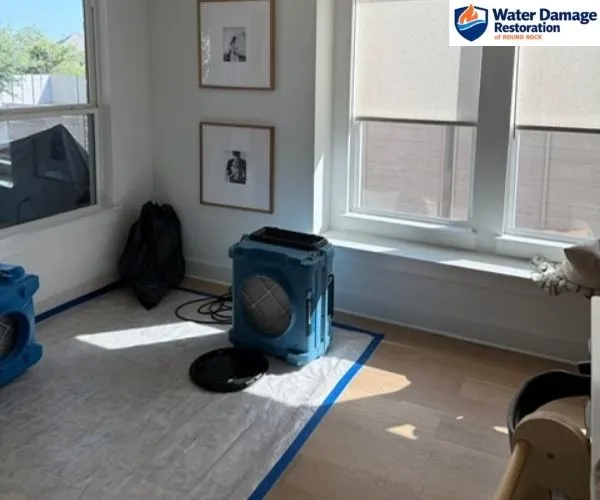
Typical Timeline Breakdown for Commercial Water Damage Restoration
| Phase | Activity | Estimated Duration |
| Phase 1: Emergency Response & Extraction | Initial site inspection, hazard assessment, containment setup, and standing water extraction. | 12 to 24 Hours |
| Phase 2: Evaporation & Structural Drying | Deployment of air movers, desiccant or LGR dehumidifiers, and daily psychrometric monitoring. | 3 to 7 Days |
| Phase 3: Decontamination & Antimicrobial Care | Application of EPA-registered disinfectants, HEPA air scrubbing, and odor control. | 1 to 2 Days (Concurrent) |
| Phase 4: Reconstruction & Repairs | Drywall replacement, painting, carpet re-installation, and final structural checks. | 1 to 3+ Weeks |
Frequently Asked Questions
How long does it take for mold to grow after commercial water damage?
Mold spores can germinate and begin colonizing damp surfaces in as little as 24 to 48 hours under ideal conditions (high humidity and ambient temperatures above 70°F). Rapid extraction and dehumidification are essential during this initial window to prevent secondary mold infestation.
Can my business stay open during commercial water damage restoration?
In many cases, yes. Restoration teams can install containment barriers, negative air machines, and temporary access routes to isolate affected zones, allowing unimpacted areas of your business to remain fully operational while drying takes place.
How do professionals know when structural drying is complete?
Technicians use non-invasive moisture meters and penetrating pin probes to compare the moisture content of affected materials against dry standards established in unaffected areas of the building. Drying is complete only when materials reach their equilibrium moisture content (EMC).
Does insurance cover commercial water damage restoration?
Most commercial property policies cover sudden and accidental water discharges, such as burst pipes or HVAC line ruptures. Gradual leaks caused by lack of maintenance or uncoordinated overland flooding typically require specific endorsements or separate flood insurance policies.
Immediate Emergency Support in Round Rock
When an unexpected leak, pipe burst, or storm flooding threatens your commercial operations, immediate intervention protects your facility and drastically cuts downtime. Quick action preserves building materials, secures inventory, and prevents costly secondary mold growth.
For dependable, fast-acting commercial emergency mitigation, contact our certified team today. Whether you need immediate emergency extraction or a comprehensive site assessment, Water Damage Restoration of Round Rock is ready to deploy state-of-the-art equipment to restore your business back to pre-loss condition safely and efficiently.
Contact us today to schedule an urgent inspection or speak with an emergency response specialist right away.