
Professional water damage restoration prevents hidden mold growth by rapidly eliminating moisture from inaccessible areas using industrial-grade dehumidification and targeted thermal drying. When a plumbing failure or indoor flood occurs, water quickly migrates behind baseboards, beneath flooring, and inside drywall cavities, creating a stagnant, high-humidity microclimate where mold spores germinate within 24 to 48 hours. By deploying specialized structural drying techniques and continuous moisture tracking, certified restoration technicians disrupt this biological window, ensuring building materials reach safe equilibrium moisture content before microbial growth can establish.
The Invisible Threat: Why Water Damage Leads to Microbial Growth
When a pipe bursts or an indoor flood occurs, the visible pooling water is only a fraction of the total problem. Porous building materials such as drywall, fiberglass insulation, wooden studs, and carpet padding act like giant sponges. Through capillary action, water travels upward and outward, seeping into the structural framing of a property.
Once moisture gets trapped behind walls or beneath flooring systems, it creates a stagnant environment with relative humidity levels frequently exceeding 70%. Because mold spores are naturally present in indoor air, they only require a viable food source (organic materials like paper backing on drywall or wood cellulose) and a consistent moisture supply to thrive. Without professional intervention, germination begins in less than two days, often completely out of sight.
Restoration specialists treat water intrusion not merely as an extraction task, but as a scientific process known as psychrometry. Psychrometry involves monitoring the interaction between temperature, humidity, and airflow to systematically draw moisture out of hidden spaces before fungal colonies can ruin the structural integrity of your home.
The Five-Pillar Restoration Framework
To reliably eliminate hidden moisture and protect property owners from secondary mold damage, our operations rely on a specific, proprietary delivery framework built around five core principles: rapid response, technical mastery, total accountability, integrity under pressure, and putting property and people first.
1. Rapid Response
In structural drying, every single minute directly dictates the scope of the damage. A fast-acting deployment protocol ensures that emergency crews arrive at a scene with heavy extraction equipment shortly after a call is placed. By drawing down standing water immediately, the lateral migration of moisture through walls and subfloors is heavily restricted. This immediate mitigation directly reduces the risk of widespread microbial colonization and preserves structural materials that would otherwise require complete demolition.
2. Technical Mastery
True moisture remediation requires advanced technical expertise and scientific precision. Technicians must be thoroughly educated in the principles of psychrometry and certified in advanced drying techniques. Rather than relying on guesswork, restoration teams utilize non-invasive moisture meters, pin-type sensors, and forward-looking infrared (FLIR) thermal imaging cameras. These diagnostic tools allow specialists to visually map hidden wet boundaries behind finished surfaces, allowing them to track structural drying progress accurately until every material returns to its normal drying standard.
3. Total Accountability
Navigating property damage can be deeply confusing, which is why a comprehensive project management approach is essential. Total accountability means managing the entire restoration ecosystem from the initial emergency water extraction through structural drying, categorizing water contamination levels, sanitization, and final cosmetic repairs. Furthermore, this principle means handling the exhaustive documentation required by insurance providers including detailed moisture maps, dry-down logs, and photographic evidence to streamline the claims process and alleviate administrative burdens for the property owner.
4. Integrity Under Pressure
Experiencing a major plumbing failure or structural flood is a chaotic, vulnerable moment for any property owner. Maintaining integrity under pressure means delivering calm, honest communication, transparent assessments, and accurate estimates when a crisis is unfolding. Technicians must clearly explain which materials are genuinely salvageable and which require controlled removal, ensuring that clients feel fully informed, guided, and respected throughout every phase of the project.
5. Property and People First
While the physical structure must be stabilized, the ultimate goal of any restoration project is safeguarding the health and well-being of the occupants. Flooding often introduces bacteria, pathogens, and allergens into living environments. Putting property and people first means utilizing hospital-grade disinfectants, botanical antimicrobials, and high-efficiency particulate air (HEPA) filtration systems during the drying phase to protect indoor air quality. By keeping families and employees safe from toxic airborne particles, a team restores true peace of mind alongside physical property.
Detailed Phase Breakdown: How Professional Restoration Halts Mold
To understand how professional water damage restoration stops mold before it starts, it helps to examine the precise steps involved in a standard structural dry-down protocol.
Advanced Moisture Mapping and Thermal Imaging
Because moisture hides behind solid surfaces, technicians use specialized thermal imaging cameras to observe temperature differentials caused by evaporative cooling. Wet building materials are naturally cooler than dry ones, allowing technicians to pinpoint exact water paths inside ceilings and walls without tearing down stable drywall.
Industrial-Grade Dehumidification and Air Movement
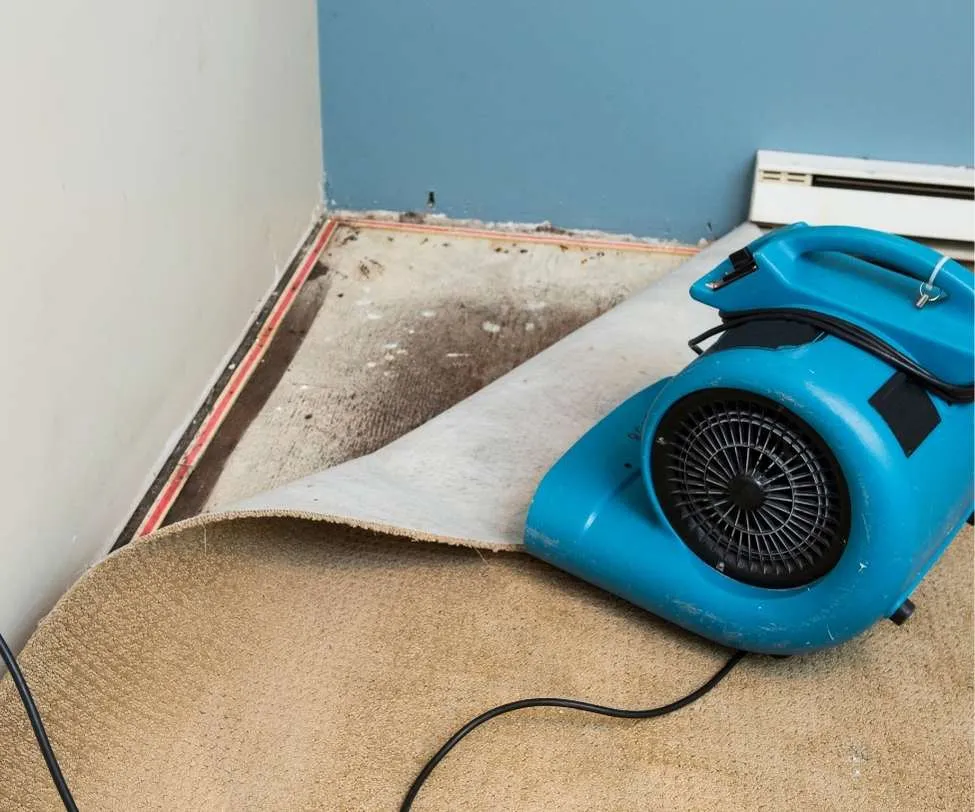
Standard household fans lack the structural capacity to dry dense building assemblies. Professional mitigation relies on low-grain refrigerant (LGR) or desiccant dehumidifiers paired with high-velocity axial air movers. Air movers pull stagnant, moist air off the surface of wet materials, while dehumidifiers capture the airborne moisture, turning it into liquid water that is pumped out of the building. This continuous cycle drops the ambient relative humidity to levels so low that mold cannot survive or reproduce.
Controlled Cavity Drying
If water has seeped inside a wall cavity, advanced systems like positive/negative air pressure trailers or injectidry systems are utilized. By removing baseboards and drilling tiny, unnoticeable holes near the floor line, technicians can pump warm, dry air directly into the wall void. This localized approach saves expensive drywall and insulation while ensuring that the interior structural wood studs are thoroughly dried.
Choosing the Right Restoration Partner
When dealing with a compromised indoor environment, selecting a partner with a deep understanding of local building styles and regional climate factors is vital. For residents navigating these challenges, finding reliable water damage restoration in Round Rock TX ensures that high summer humidity levels won’t interfere with the drying curve. Our dedicated teams frequently handle complex residential and commercial flooding scenarios throughout Central Texas, tailoring drying setups to combat local environmental demands.
Whether dealing with a sudden pipe burst or a flash weather event, local properties require prompt care. Securing professional water damage restoration in Round Rock guarantees that licensed specialists who know the area’s architecture will manage your cleanup. During recent property assessments for firms and homeowners across various local service areas, our crews successfully kept structural drying times under three days, stopping mold growth completely.
When selecting a restoration firm, always look for an organization that emphasizes certified training, relies on precise diagnostic technology, and maintains a reputation for clear communication. Working with an expert provider of Round Rock water damage restoration guarantees that your building will be meticulously brought back to pre-loss condition, keeping your indoor air clean, healthy, and completely free of mold.
People Also Ask
How long does it take for mold to grow after a water leak? Mold spores can germinate and begin to form hidden colonies within 24 to 48 hours after a water leak if a moisture source remains present on porous materials like drywall, wood, or carpeting.
Can I just use household fans to dry out water damage? Household fans are generally insufficient because they only move surface air and lack the power to draw moisture out from deep within walls, subfloors, and structural framing. Professional-grade LGR dehumidifiers and axial air movers are required to properly lower relative humidity and ensure complete deep drying.
Does insurance cover hidden mold prevention and water damage restoration? Most standard homeowners and commercial property insurance policies cover water damage restoration and structural drying if the water intrusion was caused by a sudden, accidental event, such as a burst pipe. Prompt mitigation is often required by insurers to fulfill the property owner’s duty to minimize secondary damages like mold.
What are the signs of hidden mold growth after a flood? Common indicators of hidden microbial growth include a persistent musty or earthy odor, unexplained discoloration or dark spotting along baseboards and ceilings, bubbling paint, warped wall panels, or sudden respiratory irritation and allergy-like symptoms among building occupants.
Take Control of Your Property Restoration Today
Water Damage Restoration of Round Rock is ready to respond around the clock, providing rapid extraction, advanced structural drying, and comprehensive insurance support to restore your property safely and efficiently.
Contact us immediately to speak with a dependable emergency professional.