
Water damage restoration handles burst pipes, roof leaks, and flooding through a structured emergency protocol that combines rapid extraction, thermal moisture mapping, industrial-grade dehumidification, and structural drying. Professional technicians immediately contain the source, categorize the water contamination level, prevent secondary mold growth, and fully restore affected building materials to pre-loss condition.
The Critical Role of Professional Intervention in Water Emergencies
When water enters a structure, physical degradation begins instantly. Uncontrolled water migration warps structural framing, compromises drywall load capacities, ruins subflooring, and triggers mold spore germination within 24 to 48 hours. Whether managing a pressurized pipe fracture, an overhead roof breach, or overland floodwaters, professional mitigation requires calibrated equipment and controlled engineering steps to stabilize the building envelope.
During a recent structural audit for a facility in Round Rock, TX, field inspectors confirmed that delayed response times doubled structural remediation costs due to undetected moisture migration into enclosed wall cavities. Rapid emergency mitigation halts deep moisture saturation before building materials suffer permanent structural loss.
Property owners needing comprehensive Round Rock water damage restoration can rely on complete operational oversight, spanning high-volume water extraction to direct insurance claim documentation and structural rebuilding.
Restoration Protocols for Burst Pipes
Plumbing failures release large volumes of clean or grey water directly into interior walls, subfloors, and ceiling assemblies under active pressure. Because supply lines run inside hidden wall cavities and floor joists, water travels along electrical conduits and framing channels, saturating multiple building levels before surface staining appears.
Step 1: Immediate Containment and Moisture Mapping
Technicians shut off the main water control valve to stop active supply. Using pinless moisture meters and thermal imaging cameras, crews trace hidden moisture boundaries behind sheetrock and under floor coverings without executing invasive demolition.
Step 2: Rapid Extraction and Structural Drying
Truck-mounted extraction units pull standing water directly from hard surfaces and carpet assemblies. Technicians then deploy high-velocity air movers and low-grain refrigerant (LGR) dehumidifiers. High-velocity airflow accelerates evaporation, while dehumidification lowers ambient vapor pressure to pull trapped moisture out of saturated framing studs.
Restoration Protocols for Roof Leaks
Overhead water breaches saturate attic insulation, ceiling joists, and vertical wall assemblies. Retained ceiling moisture creates immediate drywall collapse hazards and accelerates localized fungal growth in unconditioned attic spaces.
Step 1: Attic and Overhead Inspection
Technicians inspect overhead framing to locate trapped water pockets above sagging ceiling drywall. Controlled weep holes are drilled at low points to relieve hydraulic pressure and drain pooled water into containment vessels.
Step 2: Insulation Removal and Decontamination
Saturated insulation loses its thermal resistance (R-value) and retains moisture indefinitely. Crews remove wet insulation, apply EPA-registered antimicrobials to exposed roof trusses, and erect plastic containment barriers to concentrate drying equipment on affected structural members.
For properties requiring certified experts in water damage restoration in Round Rock, regional environmental factors like high outdoor humidity make precise psychrometric drying necessary to prevent persistent secondary microbial growth inside attic cavities.
Restoration Protocols for Flooding and Surface Water Ingress
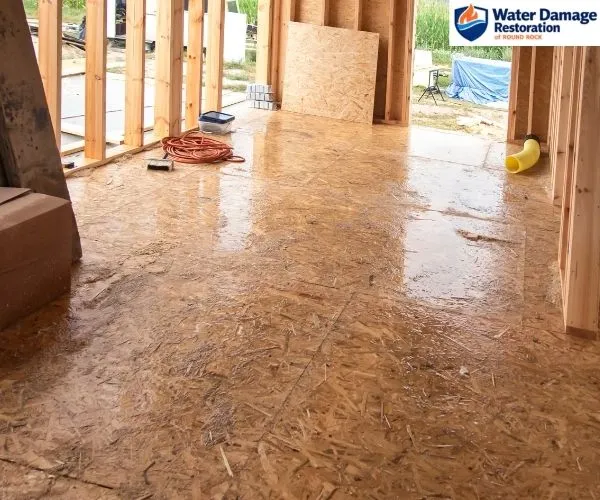
Overland flooding from torrential storms or surface runoff carries Category 3 (black water) hazards. This water contains biohazards, chemical residues, and soil pathogens, requiring biological containment protocols.
Step 1: Hazard Mitigation and Class 3 Extraction
Crews equip full personal protective equipment (PPE) before entering Category 3 environments. Extraction uses submersible trash pumps and heavy-duty suction equipment to clear floodwater containing suspended solids and organic debris.
Step 2: Controlled Demolition and Deep Sanitation
Porous materials including drywall, carpet padding, and soft insulation that absorb Category 3 floodwater cannot be decontaminated and are cut out 12 to 24 inches above the highest water mark. Structural wood framing and concrete slabs are scrubbed, pressure-flushed, and sanitized using hospital-grade disinfectant solutions.
When hiring professionals for water damage restoration in Round Rock, TX, property managers benefit from emergency units equipped with heavy-duty thermal imaging tools and direct experience with Central Texas slab-on-grade construction practices.
Our Operational Standards and Response Core
Technical equipment alone does not restore property; structured operational standards ensure execution under emergency conditions.
- Rapid Response: Unattended water expands structural damage exponentially. Immediate dispatch protocols put mobile extraction units on-site fast to stop water migration before structural framing swells.
- Technical Mastery: Restoration specialists apply applied psychrometrics monitoring relative humidity, dew point, and grains per pound (GPP) to maintain the exact atmospheric conditions required for deep material drying.
- Total Accountability: Every restoration phase is logged with daily moisture readings, thermal imagery, and detailed line-item scope reports. This transparent documentation gives property owners and insurance carriers precise proof of dry-standard compliance.
- Integrity Under Pressure: Emergency disasters create chaotic conditions. Crews deliver straightforward damage assessments, realistic restoration timelines, and direct status updates without downplaying necessary repairs.
- Property and People First: Protecting building occupants remains the primary operational directive. Containment zones, negative air machines, and HEPA filtration isolate work areas to maintain healthy indoor air quality throughout structural drying.
A residential building review in Round Rock, TX confirmed that structures managed by certified drying teams reached stable moisture standards 40% faster after major indoor plumbing failures.
People Also Ask
How fast does mold grow after a water leak or flood?
Mold spores germinate on damp cellulose surfaces (drywall, subflooring, trim) within 24 to 48 hours of moisture exposure. Immediate water extraction and controlled air drying stop mold colonization before spores mature.
Can wet drywall be saved after a pipe burst?
Drywall exposed to clean water (Category 1) can be dried in place if high-velocity air movers are deployed before the drywall core loses structural integrity or sags. Drywall saturated by Category 3 floodwater or sewage backup must be removed and discarded.
What is the difference between water mitigation and water restoration?
Water mitigation focuses on emergency loss control stopping incoming water, pumping out standing liquid, and drying structural materials. Water restoration includes the complete reconstruction phase, replacing removed drywall, refinishing flooring, and rebuilding damaged property.
Does homeowner insurance cover water damage from burst pipes and roof leaks?
Standard homeowner policies typically cover sudden and accidental internal water releases, such as a burst supply line or wind-driven storm damage to a roof. Gradual leaks caused by unaddressed wear or overland surface flooding require specific endorsements or separate flood insurance policies.
Take Action Immediately: Call for Emergency Water Damage Response
When water threatens your property, rapid mitigation prevents compounding structural loss. Secure your building with a team at Water Damage Restoration of Round Rock that dispatches immediately, communicates transparently, and manages the entire mitigation process from extraction to carrier-ready claims documentation.
Contact us today for immediate emergency dispatch, thermal moisture inspections, or direct insurance coordination support.