
The water damage restoration process involves inspecting the property, stopping the water source, removing standing water, drying affected materials, cleaning contaminated surfaces, and repairing damaged areas. Restoration professionals use specialized equipment and moisture testing to identify hidden water, reduce the risk of mold growth, and return homes and businesses to a safe, functional condition.
What Are the Main Steps in the Water Damage Restoration Process?
Water can spread beyond the area where a leak or flood first appears. A damaged ceiling, wet carpet, or small puddle may indicate moisture inside walls, flooring, or insulation. Addressing the problem promptly helps limit additional damage and determines which materials can be salvaged.
1. Inspect the Property
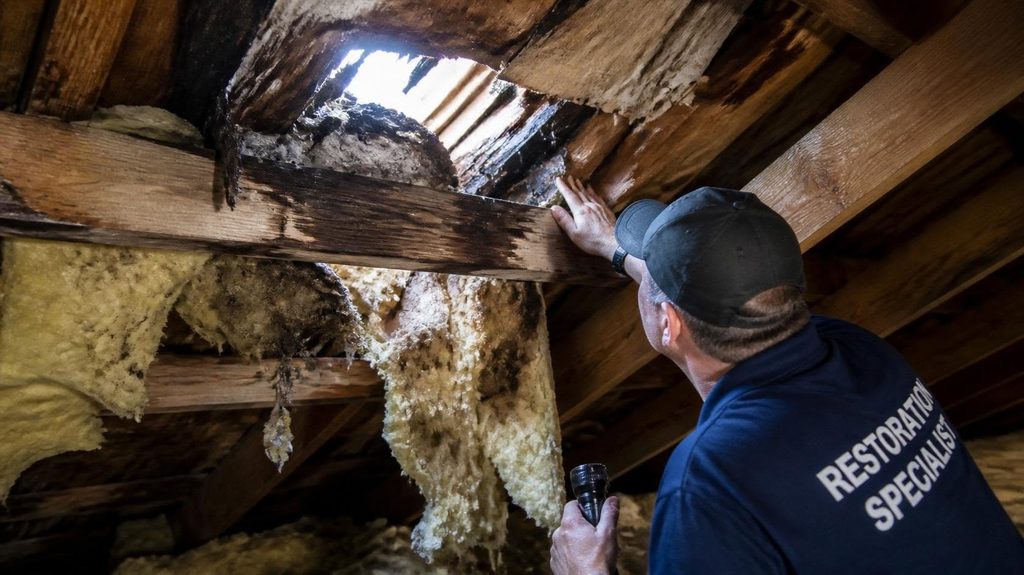
Technicians identify the water source, assess the affected areas, and check for safety hazards. The inspection may include walls, ceilings, flooring, baseboards, and concealed spaces where moisture can accumulate.
Moisture meters, humidity readings, photographs, and thermal imaging can help document the damage. The findings guide the restoration plan and establish which materials require drying, cleaning, or removal.
2. Stop the Water Source
Restoration cannot progress effectively while water continues to enter the property. Depending on the cause, the next step may involve shutting off a supply line, arranging plumbing repairs, or addressing another source of water intrusion.
Electrical hazards require particular attention. Do not enter standing water if electrical equipment may be energized. If the building appears structurally unsafe or the water may be contaminated, keep people away from the affected area and contact qualified professionals.
3. Extract Standing Water
Technicians remove standing water with equipment appropriate for the amount of water and the affected surfaces. Pumps can handle substantial flooding, while extraction equipment removes water from accessible carpets and flooring.
Prompt extraction reduces the time materials remain saturated. It also helps limit damage to furniture, baseboards, and other belongings.
4. Dry Walls, Floors, and Structural Materials
Visible water removal is only part of the job. Moisture can remain inside drywall, insulation, wood framing, and subfloors even when exposed surfaces feel dry.
Restoration teams use air movers and commercial dehumidifiers to remove moisture and control indoor humidity. They take additional readings to monitor progress and determine whether the drying strategy needs adjustment.
5. Clean and Address Contamination
Cleaning requirements depend on the source and condition of the water. Water from a clean supply line presents different risks from sewage or other heavily contaminated water.
Technicians assess which belongings and materials can be cleaned safely and which should be discarded. Appropriate cleaning, sanitation, and moisture control help reduce contamination risks and conditions that support mold growth.
6. Repair and Restore Damaged Areas
Once the necessary drying and cleaning are complete, the team determines what needs repair or replacement. Work may include replacing drywall, repairing flooring, installing new trim, repainting, or coordinating reconstruction.
Before the project is completed, the team should review the repairs, check relevant moisture readings, and explain any outstanding concerns. The goal is to restore the affected areas rather than simply conceal visible damage.
How Do Professionals Find Hidden Water Damage?
Water can travel behind walls, under flooring, and into enclosed spaces. A room may look dry while moisture remains inside building materials, increasing the risk of deterioration and mold growth.
Restoration professionals may use several inspection tools:
- Moisture meters: Measure moisture levels in compatible building materials.
- Thermal imaging cameras: Identify temperature patterns that may indicate areas requiring further investigation.
- Hygrometers: Measure humidity in the surrounding air.
- Visual inspections: Help locate stains, swelling, damaged finishes, and other signs of water intrusion.
No single tool confirms every moisture problem. Technicians interpret readings alongside material types, environmental conditions, and visible evidence before deciding whether further inspection is necessary.
For property owners researching water damage restoration in Pflugerville,TX, this inspection stage is particularly relevant when water has entered wall cavities, ceilings, or flooring. Ask how the restoration provider identifies hidden moisture and determines when drying is complete.
Water Mitigation vs. Water Damage Restoration: What Is the Difference?
Water mitigation limits additional damage, while restoration focuses on recovering the property’s condition and function. Both may be necessary after a burst pipe, appliance leak, or flood.
| Feature | Water Mitigation | Water Damage Restoration |
| Main purpose | Limit further damage | Repair and recover affected areas |
| Typical work | Emergency assessment, extraction, initial drying, temporary protection | Continued drying, cleaning, material replacement, and reconstruction |
| Timing | Begins as soon as practical | Continues through the recovery process |
| Desired result | Damage is controlled | The property is restored as appropriate |
How Long Does Water Damage Restoration Take?
The estimated timeline for water damage restoration in Pflugerville depends on the amount of water, the materials affected, contamination risks, and the repairs required. A small leak may need several days of drying, while extensive flooding can require weeks or longer if damaged materials must be removed and rebuilt.
| Damage severity | General timeframe | Factors affecting duration |
| Minor, localized damage | Several days in many cases | Limited saturation and accessible materials |
| Moderate damage | Several days to a week or longer | Multiple rooms, wet flooring, or hidden moisture |
| Extensive flooding | One week to several weeks or longer | Contamination, demolition, drying, and reconstruction |
What Is a Common Myth About Water Damage Restoration?
Myth: If a Surface Looks Dry, the Water Damage Is Gone
A dry surface does not guarantee that the material underneath has dried. Moisture can remain inside drywall, insulation, subfloors, and wooden framing after visible water disappears.
Unresolved moisture can contribute to swelling, deterioration, odors, and mold growth. Installing new flooring or painting over a damp surface can conceal the problem without correcting it.
Moisture measurements and appropriate inspections help determine whether drying is adequate before repairs begin. When evaluating restoration services, ask how the provider monitors drying and decides when affected materials are ready for repair.
Other misconceptions include assuming every damaged item must be discarded, believing household fans are always sufficient for structural drying, and expecting insurance to cover every water-related incident. Decisions should be based on the actual damage, safety requirements, and applicable policy terms.
Does Homeowners Insurance Cover Water Damage Restoration?
Insurance may cover certain types of sudden and accidental water damage, but coverage depends on the policy, the cause of the damage, exclusions, and any applicable endorsements.
Water Damage That May Be Covered
For Pflugerville water damage restoration, qualifying events may include sudden pipe bursts, accidental plumbing leaks, and certain appliance failures, depending on your insurance policy. Coverage for the resulting water damage may differ from coverage for repairing the failed pipe or appliance itself.
Water Damage That May Not Be Covered
Many standard homeowners policies exclude flooding from external sources unless separate coverage applies. Gradual leaks, neglected maintenance, and sewer or drain backups may also be excluded or subject to specific policy provisions.
What Should You Document for an Insurance Claim?
- Photograph the damage: Record affected rooms and belongings when it is safe to do so.
- Take reasonable emergency measures: Prevent additional damage without putting anyone at risk, and retain receipts.
- Contact your insurer: Follow the policy’s reporting requirements and ask what documentation is needed.
- Keep restoration records: Save estimates, inspection reports, invoices, and relevant communications.
- Confirm approval requirements: Ask about inspections and authorization before major repairs when practical, without delaying urgent safety measures.
A restoration estimate does not guarantee reimbursement. Review the policy and communicate directly with the insurer about coverage and claim decisions.
People Also Ask: Water Damage Restoration
What Are the Steps in Water Damage Restoration?
The main steps are inspection, water source control, water extraction, structural drying, cleaning, and repairs. The exact process depends on the severity of the damage, the affected materials, and whether contamination is present.
How Quickly Should Water Damage Be Addressed?
Arrange an assessment as soon as possible. Prompt action can limit additional damage, while electrical hazards and potentially contaminated water require appropriate safety precautions.
How Long Does It Take to Dry a Water-Damaged House?
Drying commonly takes several days, but extensive saturation may require longer. The timeline depends on material types, humidity, airflow, and how far the water has spread.
Can Water-Damaged Drywall Be Saved?
Sometimes. The decision depends on saturation, contamination, swelling, deterioration, and whether the material can be dried safely. Heavily damaged or contaminated drywall may need to be removed and replaced.
How Do Professionals Prevent Mold After Water Damage?
They focus on prompt extraction, effective drying, moisture monitoring, and appropriate cleaning or removal of affected materials. Addressing the underlying moisture is essential; treating visible stains alone may not resolve the problem.
Should I Stay in My Home During Water Damage Restoration?
That depends on electrical hazards, contamination, structural conditions, and the extent of the work. Follow the guidance of qualified professionals and emergency authorities if the property may be unsafe.
Get Help With Water Damage Restoration
Water damage requires prompt action, a clear plan, and careful follow-through. Inspection, extraction, drying, and repairs each play a role in addressing the damage and reducing the chance of unresolved moisture problems.
Water Damage Restoration is committed to a dependable restoration process built on technical expertise, accountability, and honest communication. If you have a leak, flooding, or suspected hidden moisture, take action before the damage spreads.
Need help now? Visit or Contact Us to contact the team and request an assessment. Prioritize safety, report the damage promptly, and get a clear plan for recovery.