
Untreated water damage increases the risk of mold growth because stagnant moisture provides the ideal environment for dormant mold spores to germinate and multiply within 24 to 48 hours. As these microbial colonies thrive on porous building materials like drywall and wood, they release airborne spores, volatile organic compounds (VOCs), and mycotoxins directly into your breathing zones, triggering severe indoor air quality problems. Leaving moisture unresolved turns a localized structural issue into a widespread environmental health hazard.
The Hidden Dangers of Standing Water
When a pipe bursts, a roof leaks, or an appliance overflows, the visible mess is only the beginning of your problems. Water flows along the path of least resistance, saturating hidden cavities, pooling beneath flooring, and soaking into structural supports. While the initial pooling of water demands urgent action, it is the invisible, secondary effects of standing moisture that pose the greatest threat to your property and your health. Understanding the timeline of water degradation is critical. Dealing with water damage in Round Rock requires a fast, scientific approach to drying. If moisture is left to sit, it fundamentally alters the indoor environment, turning a clean building into a breeding ground for biological contaminants.
The 48-Hour Window: The Biological Timeline of Microbial Germination
Mold spores exist naturally in the air, remaining harmlessly dormant until they find three things: a food source, a normal temperature range, and moisture. Common building materials like drywall, wooden studs, and carpet padding are rich in cellulose, an ideal food source. The moment water saturates these materials, the biological clock starts ticking.
Within 24 to 48 hours, spores absorb this moisture and grow microscopic roots called hyphae, which structurally digest the material as the colony expands. By the time you notice a musty odor or visible dark spotting along a baseboard, heavy contamination has already taken root. During a recent audit for a firm in Round Rock, TX, our teams discovered that a minor supply line leak behind a breakroom wall had evolved into a severe environmental hazard in just three days because the water source was left unmitigated. Waiting to address a leak is never a safe option.
The Hidden Mechanics of Air Degradation
When mold colonies establish themselves inside a water-damaged building, they actively interact with your indoor air supply through several destructive pathways:
- Spore Release: When a mold colony matures or faces changing humidity levels, it releases millions of microscopic spores into the air. The building’s HVAC system picks up these floating particles, distributing them throughout rooms that were never touched by the original water leak.
- Volatile Organic Compounds (mVOCs): The distinct, pungent smell associated with damp spaces is the byproduct of mold metabolism. These microbial volatile organic compounds are released directly into the air as gases, causing headaches, dizziness, and nausea in sensitive individuals.
- Mycotoxins: Certain toxic strains of mold produce chemical compounds known as mycotoxins. These toxins adhere to dust particles and airborne spores, entering the respiratory tracts of occupants and leading to long-term health complications.
Beyond biological growth, untreated Round Rock water damage creates a secondary air quality issue through structural decay and chemical off-gassing. Saturated particleboard, adhesives, and synthetic carpets break down under constant moisture, releasing synthetic chemical fumes into the air. High indoor humidity also attracts secondary pests like dust mites, whose debris further contaminates the indoor air supply.
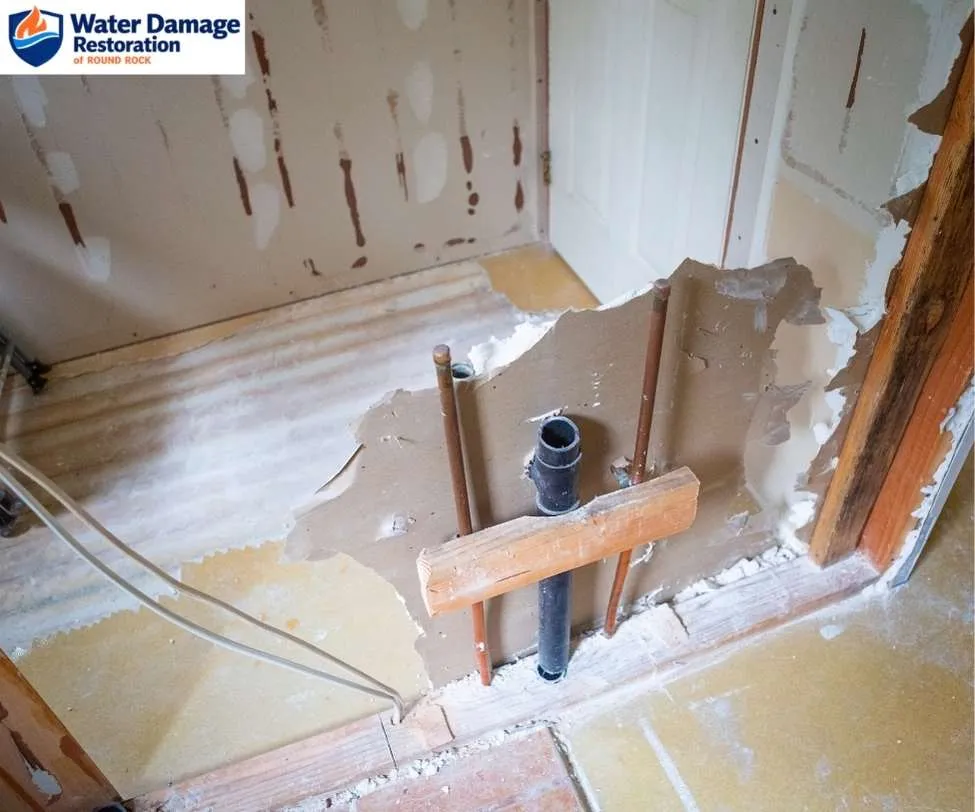
The Blueprint for Complete Property Recovery
Successfully restoring a water-damaged property and protecting its air quality requires a precise combination of immediate containment, structural drying, and medical-grade sanitation. This framework must be executed systematically to prevent secondary damage from taking hold:
1. Source Identification and Stopping the Flow
Before any drying can take place, the source of the moisture must be completely stopped. This involves utilizing thermal imaging cameras and non-invasive moisture meters to trace water migration paths behind walls and under floors without tearing up dry materials unnecessarily.
2. High-Capacity Bulk Water Extraction
Standing water must be removed immediately to relieve pressure on building materials. Using truck-mounted vacuum systems and submersible pumps, heavy volumes of water are extracted from carpets, hardwoods, and concrete surfaces to accelerate the overall drying timeline.
3. Precision Thermodynamic Structural Drying
Once bulk water is removed, bound moisture trapped inside porous materials must be evaporated. This is achieved by strategically placing high-velocity air movers to create airflow at the surface level, coupled with industrial Low-Grain Refrigerant (LGR) dehumidifiers. The dehumidifiers pull the evaporated moisture out of the air, maintaining an ultra-low relative humidity environment that starves mold spores of the water they need to survive.
4. HEPA Air Filtration and Environmental Stabilization
To prevent hidden spores from spreading during the drying process, industrial air scrubbers equipped with certified HEPA filters are deployed. These units continuously cycle the indoor air, capturing particles as small as 0.3 microns, effectively cleaning the air while the structure dries.
5. Antimicrobial Treatment and Final Surface Sanitation
All affected surfaces are treated with hospital-grade, EPA-registered antimicrobials and disinfectants. This step destroys existing surface fungal structures and leaves a protective barrier to inhibit future spore germination, ensuring long-term indoor environmental safety.
Our Operational Philosophy: The Standards of Elite Restoration
When disaster strikes your home or business, you need an organized force that operates under a strict set of professional principles. At Water Damage Restoration of Round Rock, our business decisions and daily actions are governed by five core operational pillars designed to protect your property and eliminate the stress of an emergency.
- Rapid Response: We operate with a strict “minutes matter” approach because water never stops destroying your property. Our emergency dispatch systems ensure that certified teams are on-site immediately, cutting off water damage in Round Rock, TX before it can transition into a widespread mold infestation.
- Technical Mastery: Every restoration scenario presents a unique puzzle of relative humidity, vapor pressure, and material science. Our technicians hold advanced certifications and utilize elite, state-of-the-art diagnostic equipment and structural drying tools to ensure your property is dried completely to scientific standards.
- Total Accountability: We take absolute ownership of the entire restoration lifecycle from the initial emergency call to the final structural repairs. This includes managing full documentation, photo logs, and complete insurance coordination support so you can focus on your family or business while we handle the logistics.
- Integrity Under Pressure: Property disasters are chaotic and overwhelming. We pride ourselves on delivering calm, professional clarity, providing completely transparent assessments, honest project timelines, and straightforward communication when you need it most.
- Property and People First: Beyond saving wood and drywall, our mission is to protect the safety and well-being of the people living and working inside those spaces. Every containment zone we build and every air scrubber we deploy is centered around creating a safe, non-toxic environment for you, your children, or your employees throughout our primary Service Areas.
People Also Ask
How long does it take for mold to grow after water damage occurs?
Mold spores can germinate on damp surfaces within 24 to 48 hours. If relative humidity stays above 60% and materials remain untreated, visible colonies can form and release airborne spores within 3 to 5 days.
Can I dry out water damage myself with household fans? No. Household fans only circulate air for comfort; they cannot extract bound moisture from building materials. Without industrial dehumidifiers, standard fans simply push moisture into the air, raising indoor humidity and accelerating mold growth on surrounding surfaces.
What are the signs of hidden water damage in a house? Common signs include unexplained musty odors, peeling wallpaper, warped baseboards, sagging drywall, and discolored yellow or brown stains. A sudden, unexplained spike in your water bill can also indicate a hidden leak.
Does homeowners insurance cover mold remediation and water damage? Most policies cover water damage and subsequent mold cleanup if the cause was sudden and accidental, like a burst pipe. However, mold damage caused by long-term neglect, poor maintenance, or unresolved slow leaks is usually excluded.
Take Control of Your Indoor Environment Today
If your property has experienced a recent leak, overflow, or flood, waiting even a single day can drastically increase your restoration costs and compromise your indoor air quality. Don’t let hidden moisture turn into a toxic mold problem for your family or employees. Our fast-acting, highly professional Water Damage Restoration of Round Rock is standing by 24/7 to bring technical mastery, complete transparency, and immediate relief directly to your doorstep.
Contact us today to learn more about our comprehensive structural drying systems, or call our emergency hotline immediately to schedule an urgent, high-precision moisture inspection.