
Restoration professionals detect hidden moisture behind walls and under flooring with moisture meters, thermal imaging cameras, and targeted inspections. They compare readings across building materials, investigate suspicious areas, and monitor drying progress to determine where water remains and whether materials can be dried or need removal.
Why Hidden Moisture Is Difficult to Detect
Water can travel far beyond the spot where a leak or flood first occurred. It may seep behind drywall, collect beneath flooring, soak insulation, or reach wooden subfloors. Even after visible water has been removed, concealed materials may remain damp.
Common warning signs include musty odors, swollen baseboards, bubbling paint, warped flooring, and recurring water stains. However, these signs do not always show how far moisture has spread. A wall can appear normal while its insulation or framing remains wet.
Services help identify affected materials after significant water intrusion, particularly in Hutto Water Damage Restoration. An inspection helps determine whether additional drying, selective material removal, or repairs are needed.
1. How Do Moisture Meters Detect Hidden Water?
Moisture meters measure moisture-related properties in building materials. Restoration technicians use them to test suspected wet areas, compare readings, and track changes during drying. The results help establish where further inspection is needed.
How Professionals Interpret Moisture Readings
A reliable assessment involves three steps:
- Establish a baseline: Take readings from comparable areas that appear unaffected.
- Map the moisture: Test multiple points to identify patterns and estimate the affected area.
- Verify the results: Use additional measurements or inspection methods when readings suggest concealed moisture.
Recording results also helps technicians determine whether drying is progressing. One measurement alone may not establish the full extent of the damage.
2. How Does Thermal Imaging Find Possible Moisture Behind Walls?
Thermal imaging cameras display temperature differences across surfaces. Water intrusion and evaporation can create patterns that help technicians identify areas requiring further investigation.
For example, a technician may notice an unusual temperature pattern near a plumbing line or along the bottom of a wall. This helps direct moisture testing toward a suspected problem area without immediately opening the wall.
Thermal imaging does not directly measure water content. Air leaks, missing insulation, sunlight, and other temperature differences can create similar patterns. Technicians must verify suspicious findings with appropriate moisture meters or additional inspection methods.
Moisture Meters vs. Thermal Imaging Cameras
| Feature | Moisture meter | Thermal imaging camera |
| Primary function | Measures moisture-related properties | Displays surface temperature patterns |
| Main use | Testing specific areas and monitoring changes | Scanning surfaces for suspicious areas |
| Advantage | Provides readings that can be compared over time | Helps locate potential problem areas quickly |
| Limitation | Results depend on the material and instrument | Cannot independently confirm moisture |
| Best role | Verification and monitoring | Initial screening and targeted investigation |
Using both tools helps technicians identify suspicious areas and investigate them more confidently than relying on either method alone.
3. How Do Professionals Inspect Inside Walls?
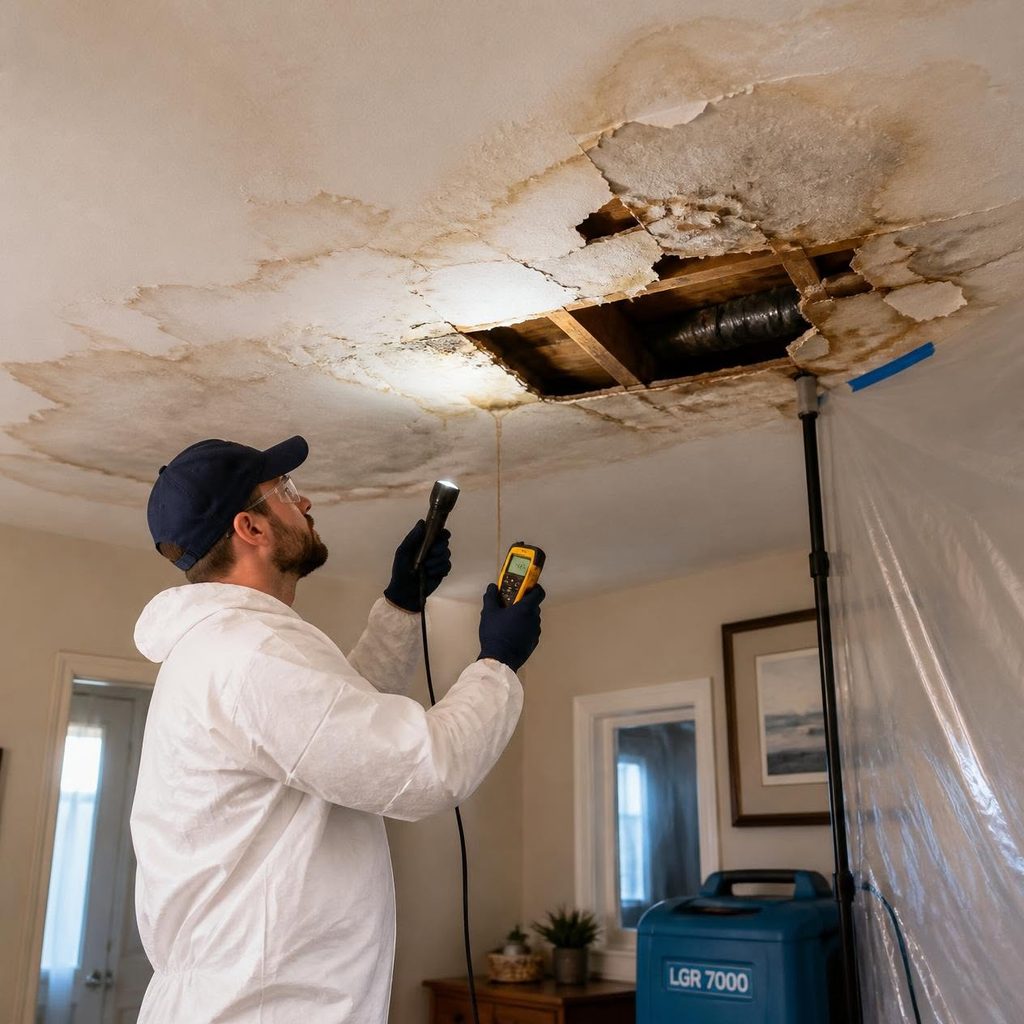
When water enters a wall, it can move along framing, collect behind baseboards, and soak insulation. A visible stain may appear several feet away from the original leak, depending on the water pathway and building construction.
Technicians first examine visible damage and identify possible entry points, including plumbing connections, windows, ceilings, and exterior walls. They then use moisture readings and thermal imaging to narrow down areas that need closer inspection.
If non-invasive testing cannot establish the extent of the damage, technicians may inspect an accessible cavity or recommend a small exploratory opening. A borescope camera can also help examine concealed spaces through an existing access point or suitable small opening.
Opening a wall is not always necessary. The decision depends on the inspection findings, the construction materials, and whether affected areas can be assessed and dried safely without removing the wall covering.
For homeowners looking for Water Damage Restoration in Hutto,TX, the inspection should establish where moisture remains before a repair plan is finalized.
4. How Do Professionals Detect Moisture Under Flooring?
Flooring can conceal water beneath its visible surface. Depending on the flooring system, moisture may remain in carpet padding, underlayment, adhesives, or the subfloor.
| Flooring type | Potential hidden damage | Inspection considerations |
| Hardwood | Swelling, cupping, and damp subfloors | Check board condition and take suitable readings |
| Laminate | Swollen edges and moisture beneath panels | Inspect seams, edges, and accessible underlayment |
| Vinyl | Moisture trapped beneath the flooring | Evaluate the substrate and installation system |
| Tile | Moisture in underlying materials | Assess surrounding surfaces and suitable test areas |
| Carpet | Wet padding and damp subfloors | Check padding and test the underlying surface |
A floor that feels dry does not prove that the layers underneath are dry. Some materials conceal moisture, while others develop visible distortion only after prolonged exposure.
Technicians determine whether flooring can remain in place during drying or whether selective lifting or removal is necessary. The decision depends on the material, moisture levels, access to affected layers, and risk of further deterioration.
5. What Is the Process for Detecting Hidden Moisture?
A structured inspection helps technicians identify the water source, locate affected materials, and determine appropriate restoration steps.
- Identify the water source. Investigate leaking pipes, appliance failures, roof leaks, or flooding. Stop active leaks when it is safe to do so.
- Inspect visible surfaces. Look for stains, peeling paint, soft drywall, warped flooring, and musty odors.
- Scan suspected areas. Use suitable non-invasive equipment to locate areas that need further investigation.
- Take confirmatory readings. Measure moisture in compatible materials and compare results with appropriate reference areas.
- Inspect concealed spaces. Use accessible cavities, borescope inspections, or selective openings when necessary.
- Document the findings. Record affected locations and readings to guide the drying plan.
- Dry or remove affected materials. Choose the method based on material condition, contamination, and whether the assembly can be dried safely.
- Monitor drying progress. Repeat measurements to check whether materials have reached appropriate drying goals.
Inspection time depends on the number of affected rooms, the building materials, and access to concealed areas. Drying can take considerably longer, especially when insulation, subfloors, or multiple flooring layers are wet.
6. What Happens When Hidden Moisture Is Left Untreated?
Moisture inside building materials can cause further deterioration. Drywall may soften, wood may swell, flooring adhesives may weaken, and prolonged dampness can create conditions that support mold growth.
Water may also spread into adjacent rooms or concealed structural areas, increasing the amount of drying and repair work required. The longer the source remains active, the greater the potential for additional materials to become affected.
Homeowners seeking Water Damage Restoration in Hutto should pay attention to persistent odors, recurring stains, swollen baseboards, and dampness that returns after surface cleanup. These signs do not confirm concealed water on their own, but they warrant further investigation.
If floodwater may be contaminated, or electrical equipment and structural components may be unsafe, avoid entering the affected area until qualified professionals assess the conditions.
People Also Ask: Hidden Moisture Detection
Can a thermal imaging camera detect water behind walls?
A thermal camera can identify temperature patterns that may indicate hidden moisture, but it cannot confirm water by itself. Technicians verify suspicious areas with moisture meters or additional inspection methods.
Can professionals detect moisture under flooring without removing it?
Often, yes. Suitable meters and thermal imaging can help identify suspicious areas. Additional testing or selective removal may be necessary to determine the full extent of the damage.
How do restoration professionals know when a wall is dry?
They take repeated moisture readings, compare results with appropriate reference values, and assess whether materials have reached suitable drying goals. A dry-looking surface is not sufficient proof.
Can hidden moisture cause mold without a visible leak?
Yes. A concealed plumbing leak, roof intrusion, or previous flooding can leave materials damp. If moisture persists and conditions are favorable, mold can develop without an obvious active leak.
Should I call a professional if I notice a musty smell?
A persistent musty odor, especially after a leak or flood, warrants investigation. A qualified technician can assess potential moisture sources and determine whether further testing is necessary.
Protect Your Property With Professional Moisture Detection
Hidden moisture can remain long after visible water has been removed. A proper inspection identifies suspicious areas, verifies moisture conditions, and determines whether drying, material removal, or repairs are needed.
Water Damage Restoration is committed to a dependable restoration process built on technical expertise, accountability, and honest communication. If you have a leak, flooding, or suspected hidden moisture, take action before the damage spreads.
If you suspect water behind a wall or beneath your flooring, contact us to request an assessment. We focus on prompt response, technical evaluation, and clear communication so you can understand the damage and determine your next step.